Pill Text
Pill Text
Pill Text
Pill Text

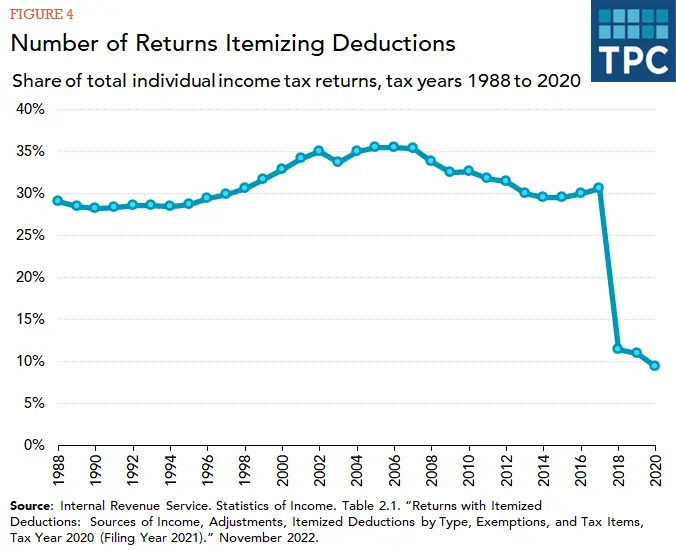
As I previously wrote, the Tax Cuts and Jobs Act (TCJA) significantly increased the standard deduction in 2017 thereby dramatically lowering the percentage of taxpayers that itemize their deductions. Before the tax cuts, about 30% of Americans itemized. Now, less than 10% do.
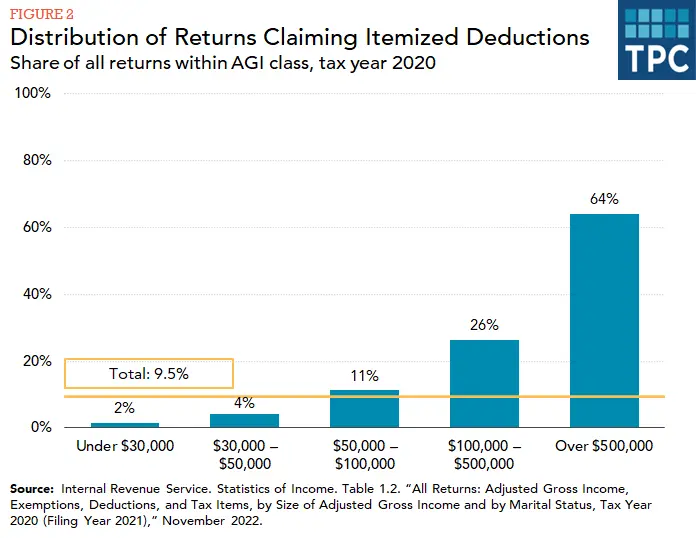
That has in part simplified tax filing for many Americans, since itemizing deductions can be a burdensome and tedious process of gathering and inputting necessary information. Still, about 15 million tax returns are itemized, and they tend to be from high income earners with itemized deductions that exceed the standard deduction. In 2022, their average income was over $350,000 with itemized deductions over $45,000.
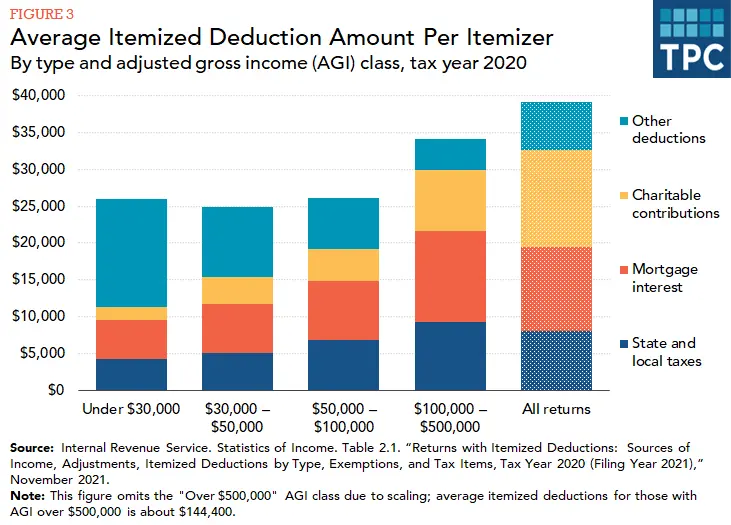
The IRS provides comprehensive guidance on what qualifies as an itemized deduction. Looking at Tax Policy Center’s analysis of 2020 filing data, the overwhelming majority of deductions came from:
-
State and local taxes
-
Charitable donations
-
Mortgage loan interest
Other deductions include unreimbursed medical expenses, losses from casualty or theft, and tax preparation fees.
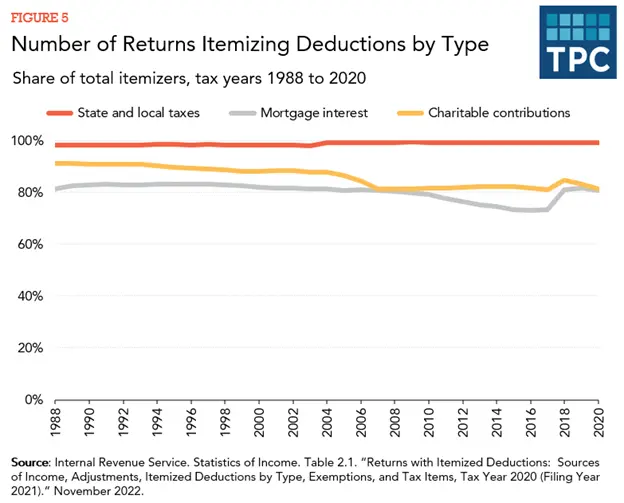
Nearly 100% of itemized filers deduct state and local income taxes, with the rate of filers doing so for mortgage interest and charitable contributions not far behind, according to the Tax Policy Center’s report. Itemized filers tend to be high-income, coastal homeowners that and give to charity.
From a practical standpoint, the dramatic reduction in itemized filers means that far fewer Americans receive any tax relief for homeownership, charitable donations, or living in high-tax states. In other words, for about 90% of filers, the economic incentives for these activities and lifestyles are diminished. There are obviously extenuating factors like higher interest rates, but charitable giving is experiencing downward pressure, homeownership rates are trending downward, and Americans are migrating en masse to lower tax states.
It remains to be seen whether the tax cuts will expire or be renewed after 2025. For now, the tax and economic landscape is dramatically different in the US than it was just a decade ago.



Related Content
Related Content
Related Content
Related Content
There's more where this came from